Self-employed? Everything you need to know about Peppol

Soon, a simple PDF invoice won’t cut it anymore. From 2026 onwards, Belgian VAT-liable businesses will switch to structured e-invoicing based on EN 16931. Peppol is the way to go: a reliable network with strict rules that let you exchange Peppol invoices safely and automatically between software systems.
In this blog post, we explain what Peppol actually is, how the “4-corner model” works, which Peppol ID you need, and how to choose the right Peppol Access Point or software.
Oh, and we’ll also give realistic cost indications, outline the differences between B2G and B2B, answer your security questions (AS4), and compare Peppol to alternatives like EDI. You’ll be fully up to speed in no time, plus benefit from faster payments and fewer administrative mistakes.
- What is Peppol?
- What does Peppol actually do for your invoicing?
- Peppol in Belgium: what changes in 2026?
- Mandatory structured e-invoices (EN 16931) and Peppol as the standard
- Non-compliant? Fines and other risks
- Is Peppol secure?
- Peppol AS4 guarantees secure, reliable data transfer
- Governance by OpenPeppol and compliance rules
- Peppol BIS Billing 3.0 and EN 16931
- What do you need to use Peppol?
- Peppol ID (Belgian enterprise number/CBE)
- Software or Access Point
- How to look up customer Peppol IDs
- Is Peppol paid? And ...
- Alternatives compared
- Step-by-step: go live with Peppol in 5 steps
- What if you don't (yet) use Peppol?
- Peppol is a must for structured e-invoicing
- Frequently asked questions about the Peppol Network
TL;DR
Peppol invoices are structured e-invoices exchanged through the Peppol network. Peppol is a secure network (and rulebook) for sending and receiving structured e-invoices based on EN 16931 directly between software systems. Belgium has fully adopted Peppol.
As of 1 January 2026, structured e-invoices are mandatory for VAT-liable businesses (B2B). PDFs or emailed invoices will no longer be compliant.
You’ll need a Peppol ID (usually your enterprise number) and compliant software or a Peppol Access Point. The Peppol network itself is free, but e-invoicing software is not. With B2Brouter, you can start for free and unlock a lifetime 20% discount through Combell.
What is Peppol?
Thanks to the international Peppol network, you can send and receive electronic invoices securely and at lightning speed. Here’s what you need to know:
Peppol in one sentence (and why it exists)
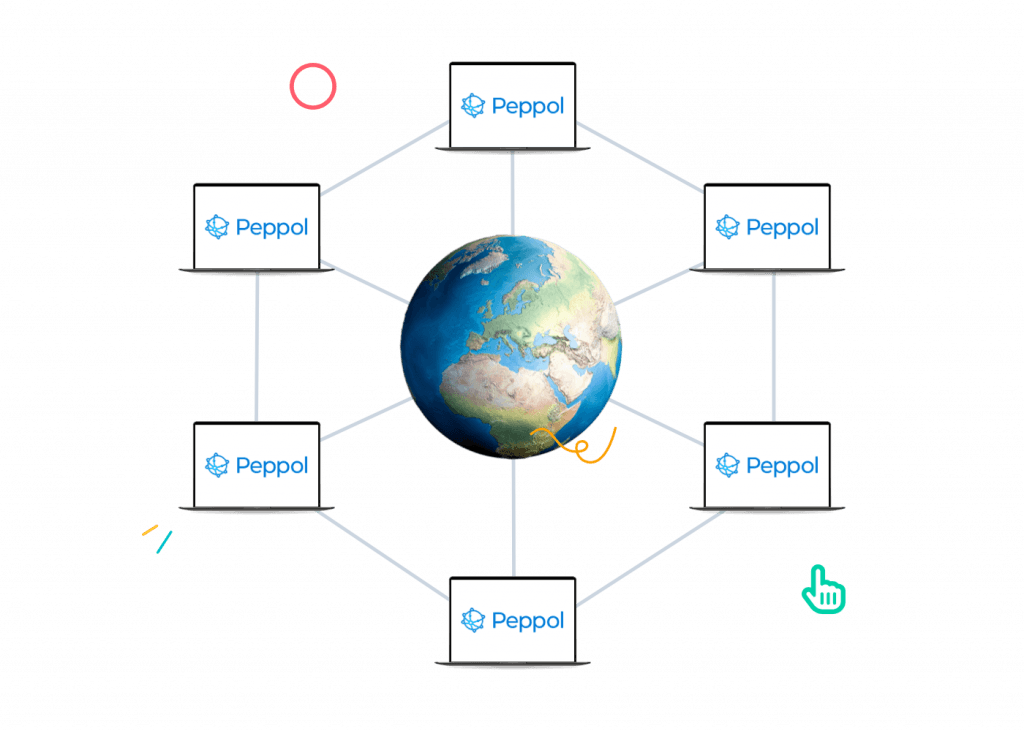
Peppol stands for Pan-European Public Procurement Online. It’s an open, international network with standardised rules to exchange e-invoices and other business documents reliably.
The goal: faster payments, fewer errors and seamless interoperability between software systems across Europe and beyond.
The 4-corner model and the role of an Access Point
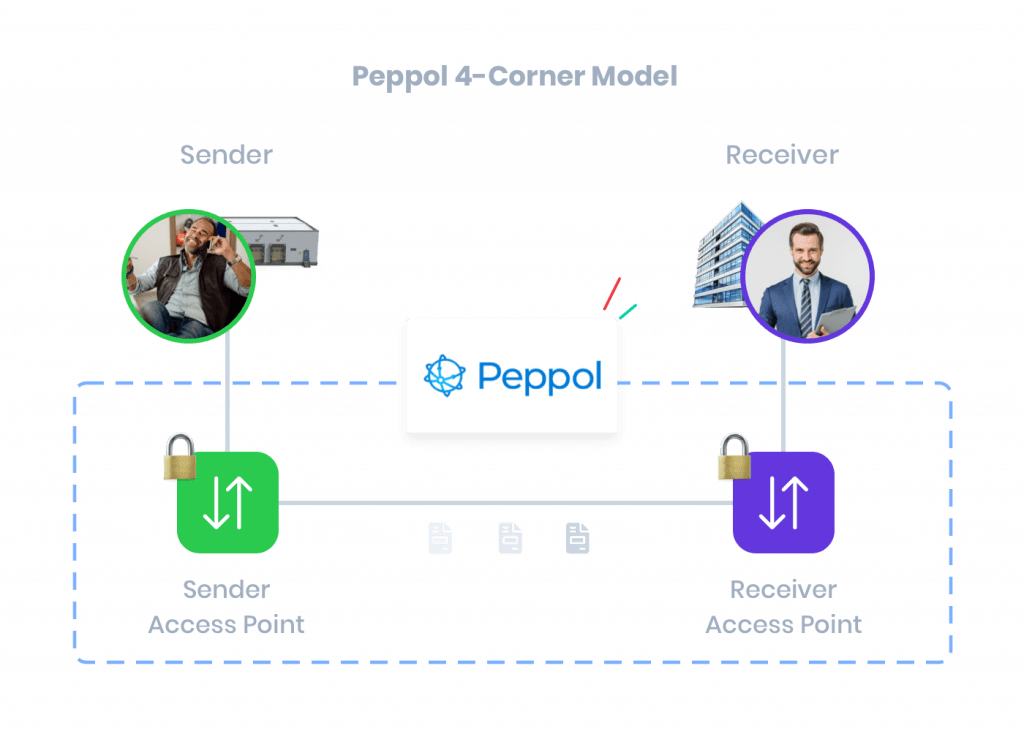
Peppol uses the 4-corner model: your software/Access Point (corner 1–2) sends a message to your customer’s Access Point (corner 3–4).
Access Points validate and route messages according to Peppol rules. The result? You no longer need a custom integration for every client or supplier, one connection to your provider (for example, Combell) is enough.
What does Peppol actually do for your invoicing?
Faster, fewer errors and automated processing
What is EN 16931?
EN 16931 is the EU’s detailed set of rules that makes e-invoicing uniform, interoperable and automatically processable across the B2B market.
B2G (governments) paved the way for B2B (businesses)
In Belgium, e-invoicing to governments (B2G) already ran through a temporary portal and the Peppol network. You could say B2G prepared businesses for what’s coming: the B2B obligation. Because from 1 January 2026, structured e-invoicing will also be mandatory between companies. Peppol is the go-to standard.
Peppol in Belgium: what changes in 2026?
Mandatory structured e-invoices (EN 16931) and Peppol as the standard
From 1 January 2026, VAT-liable Belgian companies must use structured electronic invoices that follow EN 16931. The Belgian government confirms Peppol as the standard for sending and receiving e-invoices.
Practically speaking: you no longer invoice via PDF/email, but through your accounting software or a Peppol Access Point.
Non-compliant? Fines and other risks
If you continue invoicing "the old way", you may face administrative fines and processing delays. The legal framework foresees escalating sanctions (with a remediation period).
On top of that, customers can reject non-structured invoices, putting your cashflow at risk.
"Peppol postponed?" Nope!
As of today, no delay has been announced. Quite the opposite: the legal framework is final, and government agencies and sectors are actively communicating the deadline. Our advice? Get your administration ready now so you can work compliantly from day one. Need software? As a Combell customer, you can start for free with B2Brouter and enjoy a 20% lifetime discount.
Is Peppol secure?
If there is one thing you can be certain of, it is the ultra-secure nature of Peppol. Anyone who uses the Peppol network is guaranteed secure data exchange. Let us explain:
Peppol AS4 guarantees secure, reliable data transfer
Peppol uses AS4 as its secure transport profile. Messages are encrypted end-to-end and signed; both parties authenticate via certificates. This minimises spoofing and man-in-the-middle risks. In practice: reliable delivery with a clear audit trail.
Governance by OpenPeppol and compliance rules
OpenPeppol AISBL oversees the framework: technical specifications (such as Peppol BIS Billing 3.0) and conformance testing for service providers. Only certified Access Points can exchange data, an important trust and quality layer.
Peppol BIS Billing 3.0 and EN 16931
Peppol BIS Billing 3.0 is the profiling layer on top of EN 16931. It uses UBL (and in some contexts CII) and schematron validation. Complex yet extremely robust.
Thanks to standardised code lists and business rules, accounting software across the EU can process each other’s invoices without manual mapping. This keeps implementation costs low and data quality high.
What do you need to use Peppol?
Peppol ID (Belgian enterprise number/CBE)
Your Peppol ID is usually your enterprise number (identifier 0208:"CBE number") in a standardised format. This ensures suppliers and customers can find you easily.
How to find your Peppol ID:
You can find your Peppol ID by searching for your company name, VAT number or company registration number in the official Peppol directory. An example of a valid Belgian Peppol ID is 0208:0123456789 for a company with a CBE number of 0123.456.789.
Your Peppol ID is the unique digital identification that allows your company to be found within the Peppol network. For Belgian companies, this is almost always the company number in standardised format, preceded by the Peppol code 0208, which stands for a Belgian CBE number.
This makes you clearly recognisable to suppliers and customers when you send or receive electronic invoices.
Software or Access Point
Tip
Use B2Brouter. As a Combell customer, you start for free and receive a lifetime 20% discount.
How to look up customer Peppol IDs
Check whether customers or suppliers are Peppol-ready via the Peppol Directory. Search by name or enterprise number (tip: use the 0208:CBE-number format). This helps you determine who you can invoice digitally right away.
Is Peppol paid? And ...
... how much does Peppol cost in Belgium?
The network itself is not a subscription for end users, but you pay software or service fees to your provider (software or access point). In practice:
- Some tools (like B2Brouter Basic) include free sending/receiving.
- Access Points offer different entry-level plans.
- Need higher volume, extra features (auto-booking, archiving, e-signatures…) or support? Expect higher pricing.
Tip
Compare total cost (set-up, per-document fees, add-ons) against what you get in return: integrations, discounts, support…
What does Peppol cost per month?
As mentioned, Peppol itself is free. In practice, monthly costs depend on your provider, bundle and volume.
If you choose Combell's B2Brouter, you can start for free and then benefit from a 20% lifetime discount. This brings the cost down to just under 7 euro (Professional).

Alternatives compared
Before listing alternatives, it’s important to stress that Peppol is the standard for e-invoicing in Belgium and increasingly across Europe.
Some businesses use Peppol alongside alternative channels, as long as both parties agree and the alternative format still complies with EN 16931-1 and CEN/TS 16931.
Peppol vs. EDI and national formats (Factur-X/ZUGFeRD...)
When to use Peppol only vs. Peppol + EDI?
Step-by-step: go live with Peppol in 5 steps
1️⃣ Check your Peppol ID and registration
2️⃣ Search for your company and your top customers in the Peppol Directory. Can you find them? Make a note of your Participant ID and any doctypes.
3️⃣ Choose your software/access point
- Already using accounting software? Activate the Peppol module.
- Want to get started quickly without changing anything? Choose a standalone access point such as B2Brouter and link it to your accounting system later.
4️⃣ Activate and test
5️⃣ Request a test environment or send a test invoice to an internal or reliable test party. Check validation, statuses and delivery.
6️⃣ Train and inform your team and update processes
7️⃣ Document who does what (creation, approval, sending, follow-up). Add status checks and fallbacks (e.g. resend) to your credit control.
8️⃣ Monitor and optimise
9️⃣ Use dashboards and notifications. Automate auto-bookings, payment matching and reminders. Regularly evaluate throughput times and causes of errors.
What if you don't (yet) use Peppol?
Peppol is a must for structured e-invoicing
Peppol is the fast, secure and compliant way to invoice in Belgium and across the EU. With OpenPeppol, AS4 and BIS 3.0 as its backbone, the system reduces admin and boosts integration.
With the right software or Access Point, you can be live in just a few days, helping your business get paid faster.
Getting started with e-invoicing? Free onboarding!
Peppol itself may be free, but you should bear in mind that you will have to pay for your e-invoicing software.
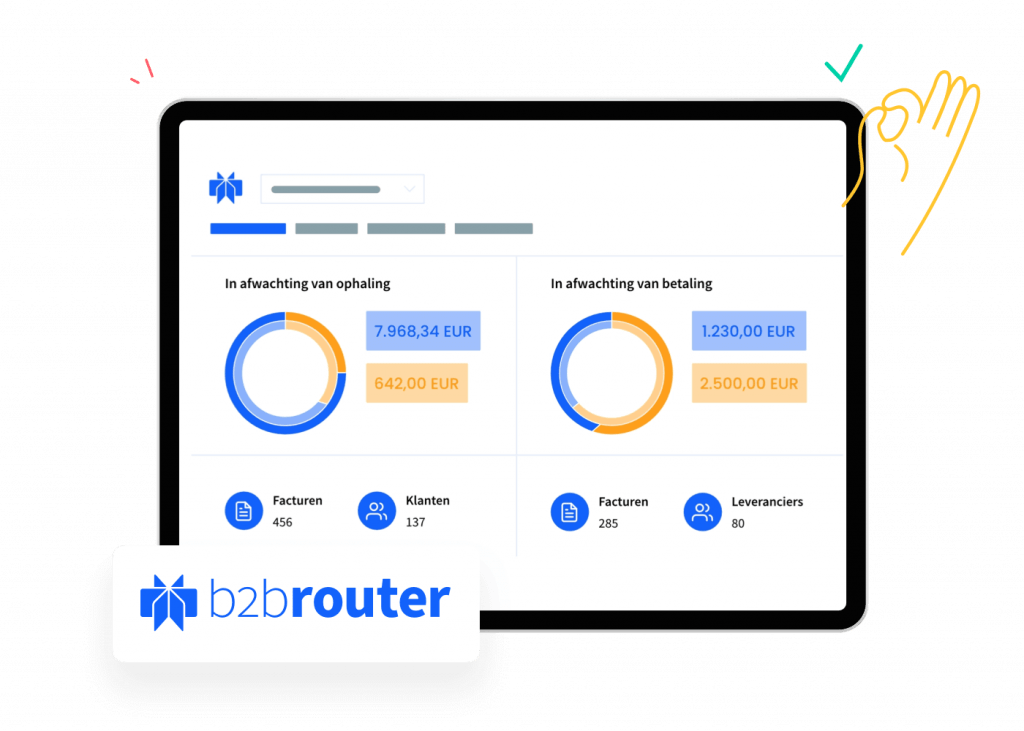
Fortunately, you don't have to lose sleep over that! Take advantage of our super affordable B2Brouter promotion. Quickly become compliant with EN 16931 and Peppol, including smooth start-up and integrations. Read more on our blog about e-invoicing software.
and you get a lifetime 20% discount via Combell
Frequently asked questions about the Peppol Network
Related posts